Sh2-101
aka The Tulip Nebula in H-Alpha + OIII + RGB
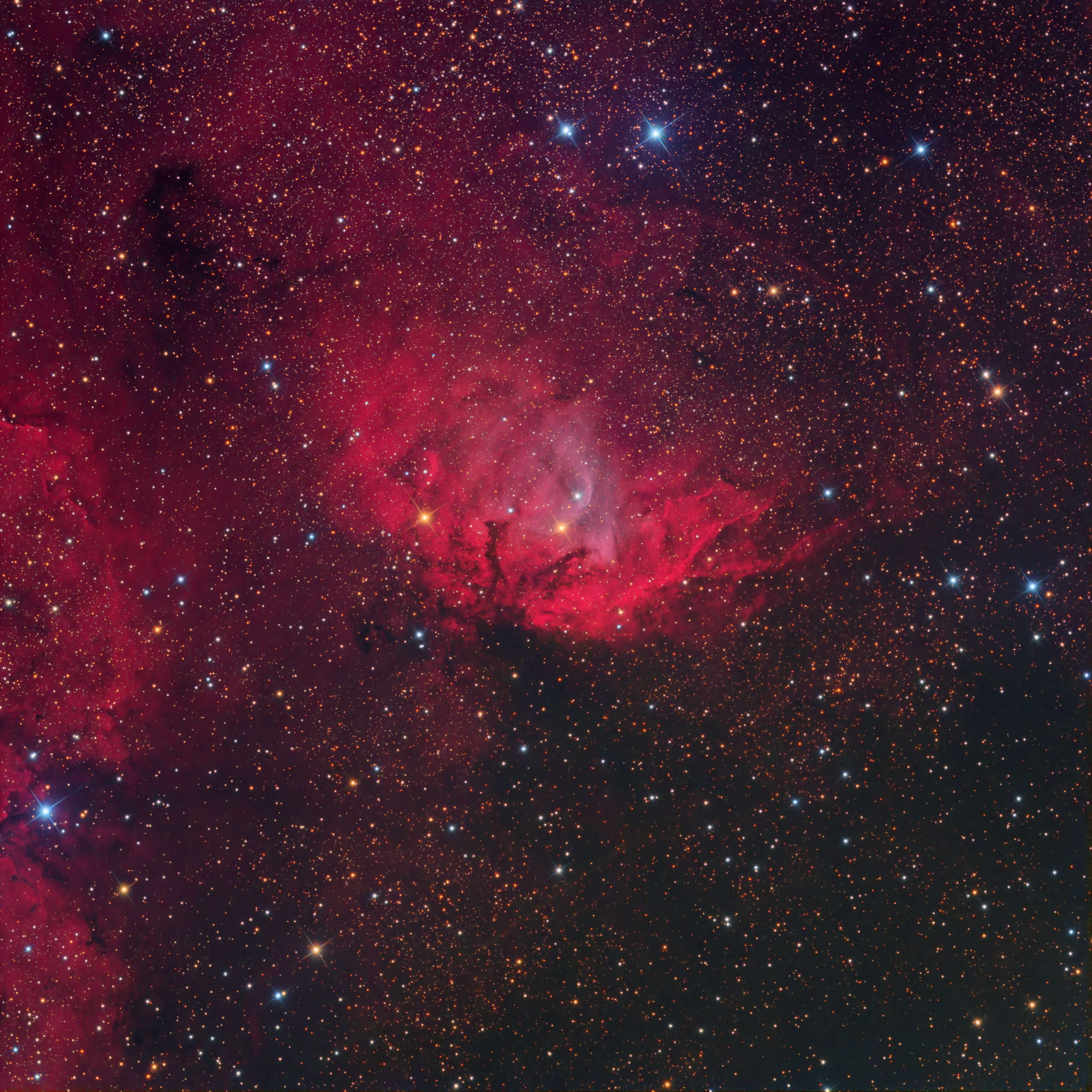
The Tulip Nebula in Cygnus - the above image is an H-Alpha / RGB
combination with additional support using the H-Alpha as a luminance
layer
Sharpless 101 (Sh2-101) is a H II region emission nebula located in the
constellation Cygnus. It is sometimes also called the Tulip Nebula
because it appears to resemble the outline of a tulip when imaged
photographically. It was catalogued by astronomer Stewart Sharpless in
his 1959 catalog of nebulae. It lies at a distance of about 6,000
light-years from Earth. Sh2-101, at least in the field seen from Earth,
is in close proximity to microquasar Cygnus X-1, site of one of the
first suspected black holes. [Wikipedia]
Scope: AP155EDF w 4" Field Flattener and Focus Boss II motorized focuser
Camera: Moravian G4 w Astrodon Gen II filters
Mount: Paramount MX guided w an SBIG ST-402ME and Borg 60mm guidescope
22 x 20 min of H-Alpha
14 x 20 min of OIII (barely any signal here)
15 x 10 min each of RGB
Acquired with CCD-Commander and TheSkyX
Calibration and colour combine in PixInsight
RGB: SPCC, BlurX, NoiseX, Curves, HT, Masked Saturation Boost and SCNR at 50%, Save-as-TIFF
H-Alpha and OIII: BlurX, NoiseX, StarX, HT, LHE, Save-as-TIFF
Photoshop
Processing: Split the RGB into channels, added the starless H-Alpha to
the Red at 100% and to the Blue at 20% using Lighten, Added the OIII to
the Green and Blue at 33% also using Lighten.
Click on any image to see it 2x this resolution and to resize it in the
browser.
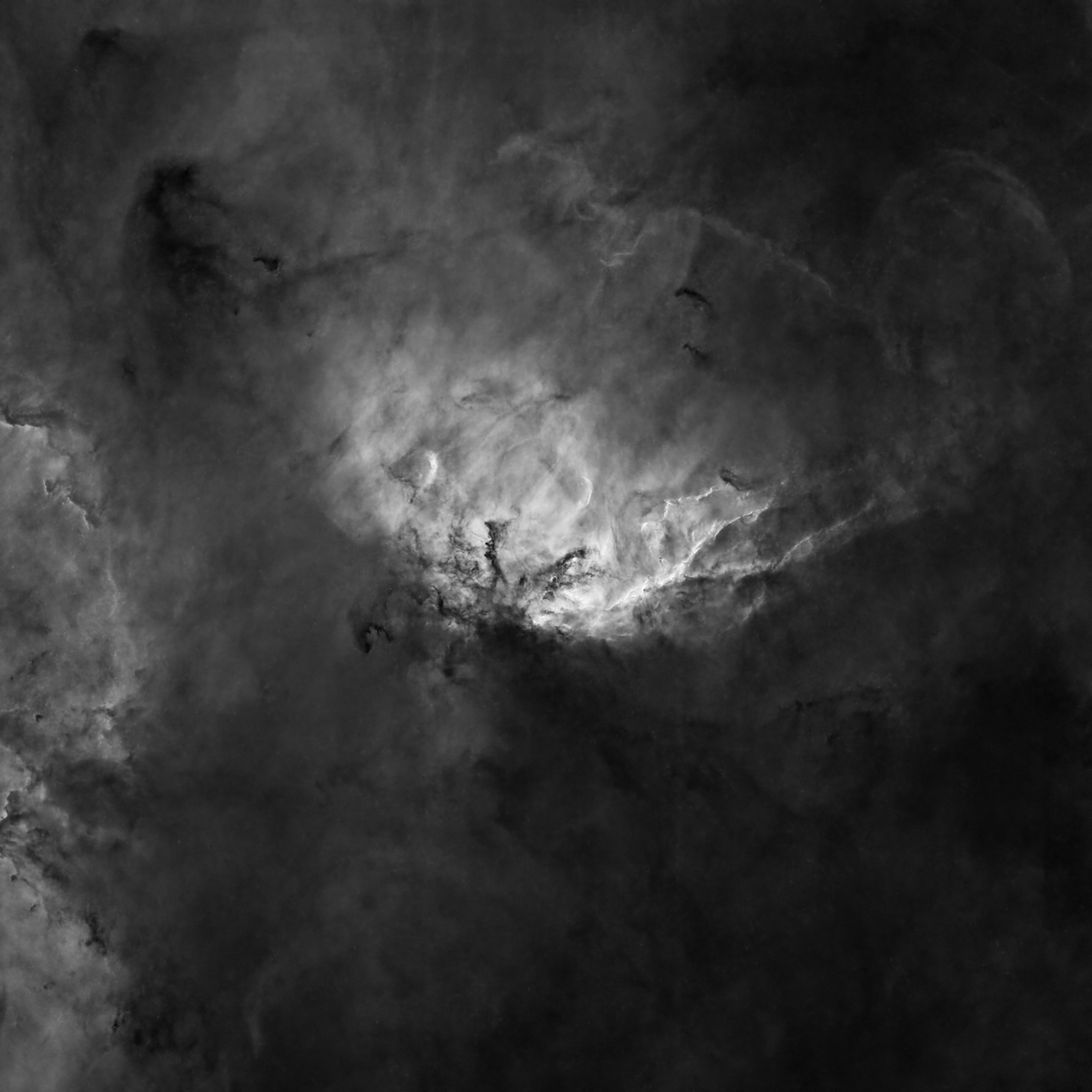
Here is just the H-Alpha data (there was almost no signal in OIII except for the very centre)
Lucknow, Ontario
Data acqired July 2021, Reprocessed July 2024
Home